
Backyard Hummingbird Haven


Every summer, Rohn and I spend a few days camping at Sugarite State Park in New Mexico. Park rangers, camp hosts and campers like us hang up sugar water feeders and enjoy the antics of dozens of hummingbirds fighting over the coveted spots to drink the nectar. It is mesmerizing to listen to the soft buzzes and wing rush noise and watch as hummingbirds pass a foot or two in front of our camp chairs.

We put up two feeders in our campsite in July 2026 and counted 30 birds at one time vying for the feed. We even saw females/juvenile birds taking turns feeding from one of the five access slots in the feeder.
And then every year, we have to return home from the mountains. Amarillo, Texas is not recognized as idyllic for hummingbirds. We only have one species--the Black-chinned Hummingbird--that spends the summer and nests here.

Any other hummingbirds spotted in our area are migrants (passing through during spring or fall) or vagrants (species that appear well outside of their normal geographic range or usual migratory path). Fall migration brings higher numbers of birds to our area than spring, because the path to Mexico and Central America that some species, like Rufous Hummingbirds, take in autumn runs east of the Rockies.We also see more hummingbirds in the fall because fall migrants include the year's young, because favorite fall flowers like salvias are peaking in July through October, and because there is no rush to breed in the fall so some birds dawdle as long as there is abundant food.

But despite Amarillo being an unlikely place to see large numbers of hummingbirds, Rohn and I set out to attract as many to our suburban backyard as possible. We focused on what could work in Amarillo. That meant planting the tubular-shaped native flowers that they favor, providing additional food in feeders (just a 4:1 ratio of water and sugar, nothing else), setting up shallow, moving water features, and giving them plenty of perches and greenery to keep them interested in staying more than a few minutes. It turns out that catering to hummingbirds in the Texas Panhandle is a lot of work, but it also offers many moments of beauty, wonder and joy in our own yard.


Two years ago, we started by getting rid of useless lawn and adding more flower beds. Rohn built a large gravel and flagstone path from our back porch to the gate in our fence that leads to the alley. That path became the warm and welcoming focal point of our backyard. It also created new flower beds, giving us an opportunity to plant hummingbird-friendly plants very close to our backyard patio. That porch has become my sanctuary where I sit every evening with my binoculars, camera, and a book.
Adding native plants has been a significant upgrade to our backyard. All of our additional plants are waterwise, cold-hardy and perennial (or self-seeding), so caring for them is not time-consuming. And the payoff is that we have seen many bees, butterflies and birds enjoying our additional salvia, Turk's Cap, Cardinal Climber vine, catmint, etc. Being a host home for the Panhandle Bird Club's first annual garden tour on a Sunday at the end of August 2026 was a powerful motivator for much of this work, but we have continued to enjoy the benefits even after the tour day was over.


We aren't purists, though. Our yard still contains plenty of non-native, healthy plants that we aren't going to rip out, such as two Roses of Sharon (althea) planted more than 50 years ago by the original homeowner (and used for shelter by many birds), hot pink Knockout Roses that we planted right after we married 20 years ago, and two huge white Crape Myrtles that came from my parents' yard in Arlington, Texas. My mom and dad are both deceased and my childhood home has long been sold, so those white blossoms on those giant Crape Myrtles bring back memories that always make me smile.

We do all the healthy practices to support the wildlife we are attracting: compost our leaves and food waste, collect our rainwater, avoid pesticides, clean our feeders thoroughly, and provide fresh food daily in heat waves. Consequently, we've had a steady stream of pollinators since early spring 2026 and butterflies have been abundant.

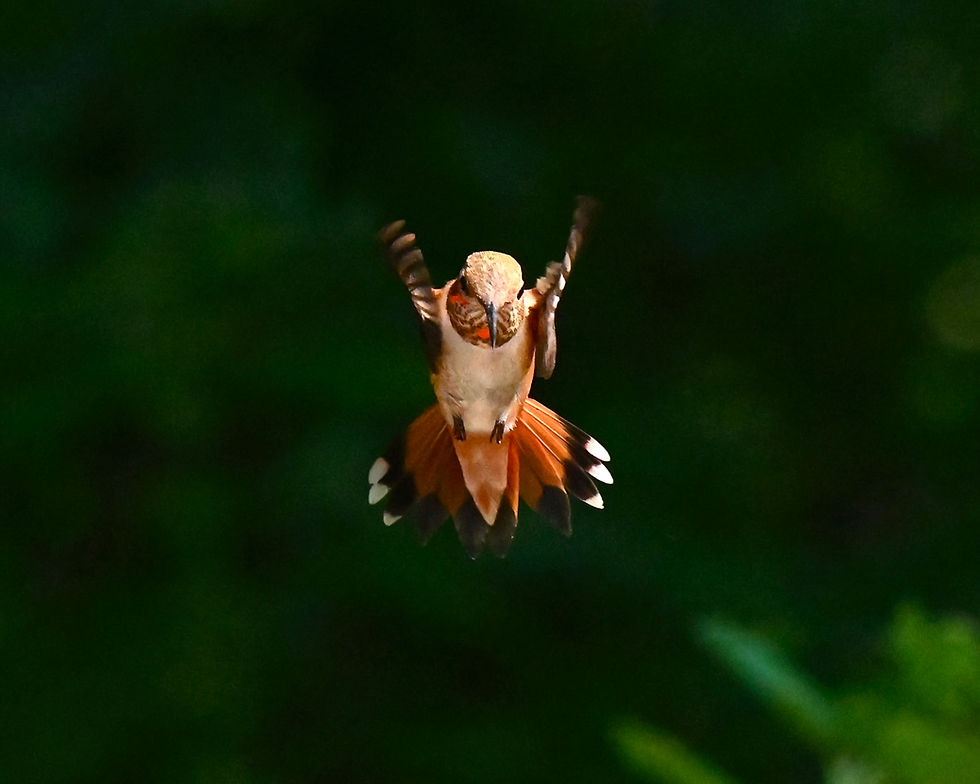
But the most exciting part for me is that we have now seen six species of hummingbirds in our yard. On some evenings, we have counted at least five birds playing chase in and out of the blooms. Every day when I arrive home from my law office, I immediately walk into the backyard to enjoy the sights and sounds of our little hummingbird haven.


While watching the nightly parade of hummers, I've also seen other interesting birds in our yard. We don't often see warblers, but Northern Yellow Warbler, Wilson's Warbler, Nashville Warbler, Yellow-rumped Warbler and Common Yellowthroats occasionally show up. Clay-colored Sparrows were a new addition in 2026, and a Golden-fronted Woodpecker has begun visiting our suet feeder and bird bath every day since July.
Autumn arrived in Amarillo this week and I know that the last few fall migrants will be flying out of our area soon. It's getting too dark for photos around the time I come home from work, and the patio has become chilly. Soon I won't have to make sugar water and clean hummingbird feeders and their umbrella-shaped ant moats every other day. But this year's success has me dreaming big. Rohn is retired now, so would it be too much to ask for him to rip out our entire front lawn and replace it with another big flagstone path, native plants, garden benches and some shepherd's crooks holding hummingbird and seed feeders?

Comments